


INSERM U1242 Oncogenesis Stress Signaling - SPECIAL SEMINAR
Integrative discovery of non-canonical neoantigens: emerging opportunities and challenges for cancer immunotherapy Dr. Léa PROCHASSON PharmD and molecular…
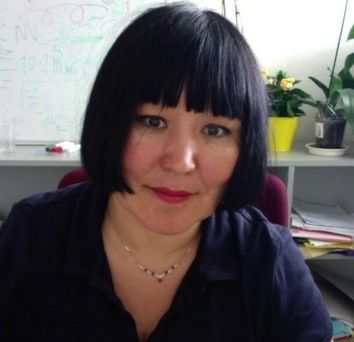
DNA repair is vital for maintaining cellular homeostasis and genomic integrity. Among all forms of genomic instability, DNA double-strand breaks (DSBs) are the most deleterious; a failure to resolve these lesions directly triggers apoptosis or cell death. Mammalian cells rely on two primary pathways to repair DSBs: homologous recombination (HR) and non-homologous end joining (NHEJ). The pathway choice is tightly regulated by the cell cycle, and emerging evidence suggests that the surrounding epigenetic landscape predisposes this repair pathway selection. In this presentation, Fatima Smagulova will show how histone deacetylase (HDAC) inhibition alters the chromatin microenvironment and influences DSB repair pathway choice in a C57BL/6J mouse testis tissue, where is the physiological abundance of programmed DSBs during mammalian meiosis. In a second part, she will describe her new project in which she propose that that chromatin compactization and a transesion biosynthesis proteins play essential role in chemoresistence in small cell lung cancer. She will talk about objectives, strategy, methods, first results, and future directions and perspectives.
Integrative discovery of non-canonical neoantigens: emerging opportunities and challenges for cancer immunotherapy Dr. Léa PROCHASSON PharmD and molecular…

Microtubule structural heterogeneity: from intrinsic lattice states to cellular function Dr. Matthieu BENOIT Researcher at INSERM Institut de Génétique &…

Presentation of the cytometry platform. Conventional cytometry to spectral cytometry Alexis AIME Platform Ingeneer CytomeTRI and ImPACcell - UMS/UAR CNRS 3480…

Mechanisms of Unconventional Protein Secretion – from basic research to neurodegenerative disease therapeutics Dr. Julien VILLENEUVE CRCN at CNRS Institute of…

À l'occasion du spectacle Scènes de la vie conjugale de Ingmar Bergman, mis en scène par Arthur Nauzyciel, la dramaturge et chercheuse spécialisée en études…

Un apéro convivial entre célibataires passionnés de randonnée à Rennes, le mardi soir. 🍻 On se retrouve autour d'un verre pour faire connaissance, échanger sur…

Avant la Tournée des Trans en novembre et leur passage aux prochaines Trans Musicales, chaque artiste accompagné·e par le festival mène une résidence de 3…

L’accompagnement à la scolarité de la Maison du Parc accueille les enfants du CE2 au CM2 deux fois par semaine. Ces temps d’accompagnement sont découper en 3…

Atelier organisé le mardi 6 octobre 2026 à 13h, dans la salle de formation de la BU Villejean Santé. PubMed est le moteur de recherche incontournable dans le…

Et si vous étiez fait pour le secteur du bâtiment ? Vous êtes en recherche d'emploi et intéressé par les métiers du bâtiment ? Cet atelier est fait pour vous !…

On aime on partage ce sont des rendez-vous réguliers dans les bibliothèques, pour partager des conseils, des coups de coeur de livres, films, ou musique. Venez…

Les équipes du Musée de Bretagne s’installent à la bibliothèque pour une découverte de l’histoire de la Bretagne à travers quelques objets et photographies…
Commentaires
Aucun commentaireUne question sur les horaires, l'accès ou le programme ? Envie de partager vos impressions ? Échangez avec la communauté By Night.