

Anna Maria Habak PhD defense
Organic Chemistry & Interfaces (COrInt) & Condensed Matter and Electroactive Systems (MaCSE) teams Abstract Aqueous organic redox flow batteries (AORFB) have…
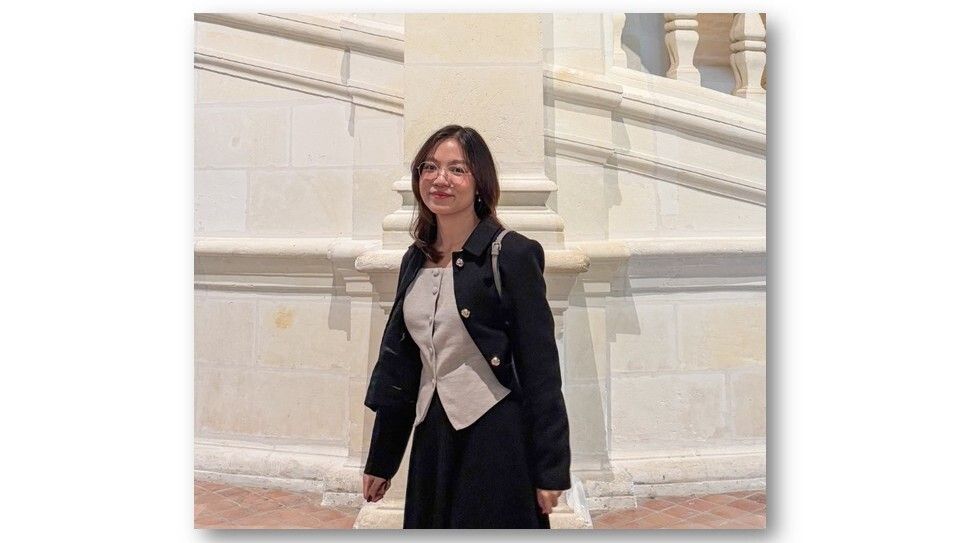
Organometallics: Materials & Catalysis (OMC) team
Abstract
The interplay between molecular chirality, lanthanide magnetism, and optical properties provides a promising platform for investigating magneto-chiral phenomena. This work focuses on helicene–lanthanide complexes, with particular emphasis on magneto-chiral dichroism (MChD), a magneto-optical phenomenon arising from the combined presence of chirality, magnetism, and light.
A series of enantiopure helicene-bipyridine lanthanide complexes based on erbium, thulium, and dysprosium was investigated to elucidate the influence of molecular structure, lanthanide electronic configuration, and magnetic properties on their MChD responses. The effect of molecular orientation was examined in the erbium complexes, and their potential for magneto-optical applications was further demonstrated through a proof-of-concept magneto-optical diode. The thulium and isotopically substituted dysprosium systems provided further insights into the role of lanthanide electronic structure and magnetic relaxation in the MChD response.
Magneto-chiral photochemistry was further explored using olefin–lanthanide systems to investigate the influence of magnetic fields on photochemical reactions. During these studies, a previously unobserved organic compound was discovered, and its formation was investigated through control and mechanistic experiments.
Overall, the results highlight helicene–lanthanide complexes as promising molecular platforms for studying and exploiting MChD.
Jury
Elizabeth HILLARD, CNRS Research Director, University of Bordeaux, ICMCB / Reviewer
Jean-Pascal SUTTER, CNRS Research Director, Laboratoire de Chimie de Coordination Toulouse / Reviewer
Alexandre ABHERVE, CNRS Reseacher, University of Angers, Moltech-Anjou / Examiner
Kevin BERNOT, Professor, INSA Rennes, ISCR / Examiner
Supervisors
Jeanne CRASSOUS, CNRS Research Director, University of Rennes, ISCR
Matteo ATZORI, CNRS Researcher, Laboratoire National des Champs Magnétiques Intenses, Grenoble
Fabrice POINTILLART, CNRS Research Director, University of Rennes, ISCR
Contacts
Inkarat Atirojwanich, Inkarat.atirojwanich@univ-rennes.fr
Jeanne Crassous, Jeanne.crassous@univ-rennes.fr
Organic Chemistry & Interfaces (COrInt) & Condensed Matter and Electroactive Systems (MaCSE) teams Abstract Aqueous organic redox flow batteries (AORFB) have…

We are pleased to welcome at ISCR (Organic Chemistry & Interfaces team), Agnès Labande (Laboratoire de chimie de coordination Toulouse) in the framework of…

Condensed Matter and Electroactive Systems (MaCSE) team Abstract Redox-active electron-rich molecules have raised a strong interest for their promising…

Organometallics: Materials & Catalysis (OMC) team Abstract Single-chain magnets exhibit magnetic bistability at the molecular scale and hold promise for…

Entouré de Franck Durand (batterie), Mathieu Debordes (Fender Rhodes) et Hervé Moquet (basse), le guitariste Alex Grenier fait voyager ses compositions aux…

Assemblée Générale Ordinaire Chères adhérentes et chers adhérents, Nous vous convions à notre Assemblée Générale Ordinaire 27 novembre à 18h30. C’est un moment…

Bad Mongo est un groupe de reprises du groupe norvégien de punk rock Turbonegro. https://www.facebook.com/p/Bad-Mongo-Turbonegro-Tribute-100087850004873/…

Bécaye Ndiaye, plus connu sous son nom de scène Bek'Art, est un auteur-compositeur-interprète sénégalais . Passionné de musique depuis son jeune âge, il s’est…

Inspiré par les rythmes latins, les percussions afro et les instruments de la musique traditionnelle d'amérique du sud, BogotaBeats accompagne ses DJset de…

À partir d’images d’archives, Gurshad Shaheman raconte l’histoire des cabarets qui faisaient la réputation sulfureuse des nuits de Téhéran avant la révolution…

Gurshad Shaheman est un auteur, metteur en scène et performeur, franco-iranien. Dans Cabaret Téhéran, il nous plonge dans les nuits sulfureuses de Téhéran…

Je veux en savoir plus sur l’IA ! Sommes-nos entrés dans l’ère de l’IA ? Au-delà du fantasme, démêlons ensemble le sujet et les enjeux de l’intelligence…
Commentaires
Aucun commentaireUne question sur les horaires, l'accès ou le programme ? Envie de partager vos impressions ? Échangez avec la communauté By Night.