


Bien travailler sur écran : posture, vision et sédentarité
La sensibilisation porte principalement sur trois points : • Les bonnes postures à adopter sur un poste de travail informatique dans le but de limiter…
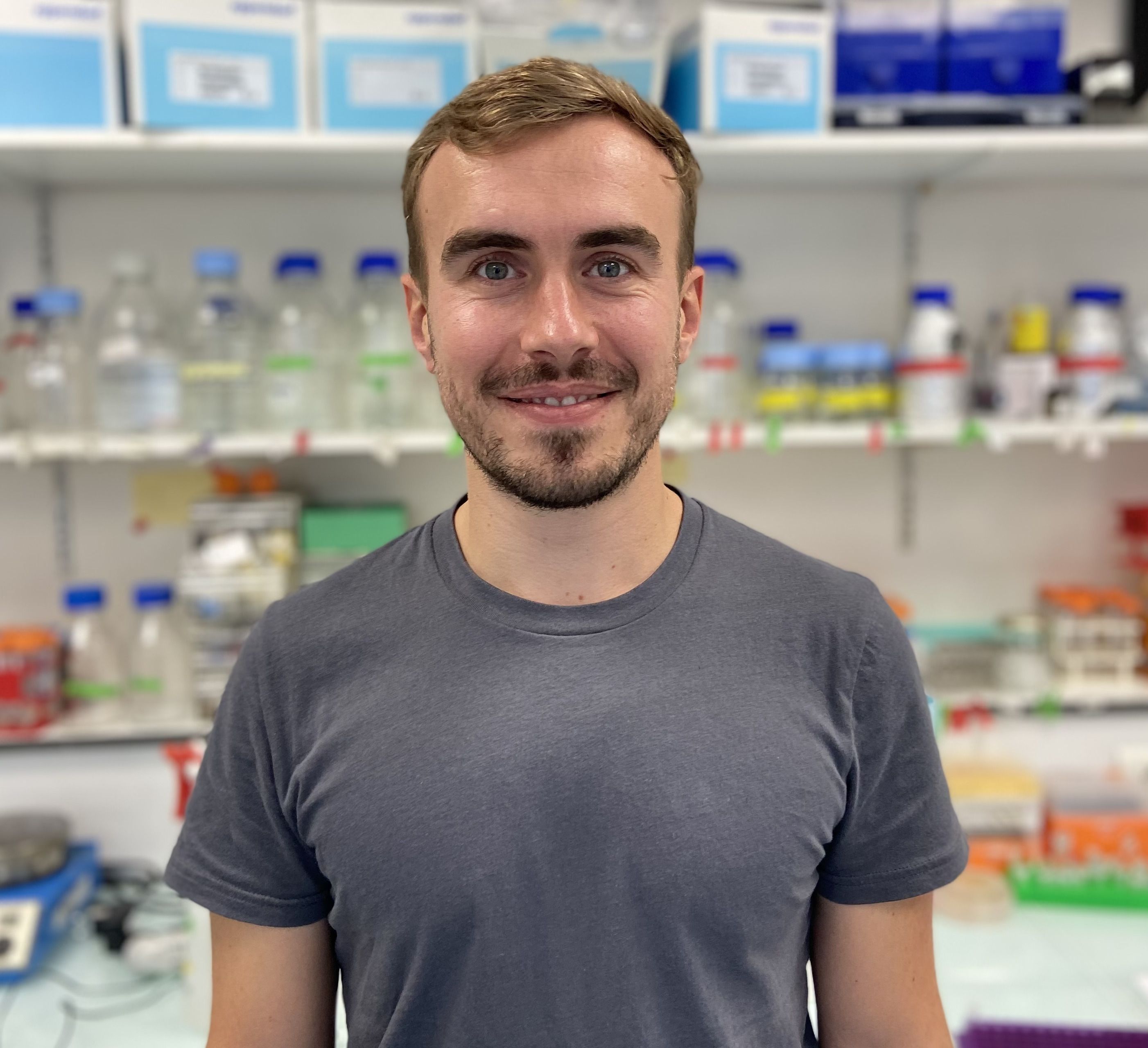
Jeune chercheur au Centre de Biologie Structurale (CBS) de Montpellier.
Équipe "Synthetic Biology" - Jérôme Bonnet
Computational protein design is transforming our ability to generate protein binders for a wide range of biomedical and biotechnological applications. However, experimental screening and characterization remain major bottlenecks, limiting the speed and accessibility of binder discovery. We recently developed Cell-Free Two-Hybrid (CF2H), a rapid and sensitive platform for detecting protein–protein interactions without the need for cloning, protein purification, or specialized laboratory equipment [1]. In this talk, I will discuss how CF2H accommodates diverse binder formats, including single-domain antibodies, DARPins, and de novo designed proteins, and how we applied it to therapeutically relevant targets such as immune checkpoints (PD-L1, PD-1) and a CAR-T-relevant receptor (IL-1RAP). Since rapid screening facilitates iterative design-build-test cycles, we also harnessed our system for AI-guided affinity maturation, yielding up to 25-fold affinity improvement over the parent design in a single round. I will close with our ongoing work extending this pipeline from human receptors to microbial virulence factors, focusing on aerolysin, a bacterial pore-forming toxin recently linked to susceptibility to ulcerative colitis [2].
La sensibilisation porte principalement sur trois points : • Les bonnes postures à adopter sur un poste de travail informatique dans le but de limiter…

Le laboratoire de recherche « The Enteric Nervous System in Gut and Brain Disorders (TENS) » est une unité mixte de recherche (UMR Inserm 1235), membre de…

Identification et impact des lymphocytes circulants dans les altérations de la fonction de barrière de la muqueuse intestinale : implications dans la…

Présentation de l'IVIS spectrum

Présenté par TOULOUSAIN PRODUCTIONS (L-2024-000325/521) & Le Grenier de Toulouse.2 POIDS, 3 MESURESTextes : Raymond Devos et Pierre ReppAdaptation et mise en…

Dans Moment de Qualité, Anne Cahen dissèque entre autres (il ne s’agirait pas de tout spoiler) le monde parfois absurde du travail, les introvertis, les choix…

Dans Moment de Qualité, Anne Cahen dissèque entre autres le monde parfois absurde du travail, les introvertis, les choix de vie, la magie du Bigdil (oui oui),…

Pièce chorégraphique et onirique mêlant danse, acrobatie, magie, clown, musique électronique et manipulation d’objets. Une caisse. Et l’imprévu qui chamboule…

Vendredis 6 novembre 17h Carte blanche à l'imagination des enfants pour créer des histoires et jouer avec les mots. Durée : 1h30 Sur inscription au 05 62 27 64…

BRIQUE Comedy Club réunit chaque semaine une sélection d’humoristes toulousains et d’artistes venus de toute la France. Sur scène, plusieurs humoristes se…

BRIQUE Comedy Club réunit chaque semaine une sélection d’humoristes toulousains et d’artistes venus de toute la France. Sur scène, plusieurs humoristes se…

Une soirée d’Opéra à Toulouse 🎻 De retour à la Chapelle Sainte-Anne, Musicâme France vous prépare une nouvelle soirée musicale exceptionnelle ! Pour cette…
Commentaires
Aucun commentaireUne question sur les horaires, l'accès ou le programme ? Envie de partager vos impressions ? Échangez avec la communauté By Night.